
Introduction:
Early education lays the groundwork for everything a child becomes — emotionally, socially, and academically. At LPS Global School, the Best School in Noida where while reading, writing, and numeracy are essential, what truly defines a strong educational foundation is how children learn to connect with others. That’s where empathy and collaboration come in.
In today’s progressive learning environments, teachers and parents recognize that emotional intelligence is just as vital as intellectual ability. Among the schools, the most respected ones go beyond traditional academics to nurture compassion, teamwork, and understanding from the very first day of schooling.
Empathy teaches children to recognize and value emotions — both their own and others’ — while collaboration helps them build trust, share ideas, and solve problems together. When combined, these values turn classrooms into thriving communities of kindness and cooperation.
About Us:
In the early years, we create a warm, collaborative environment where friendship, feelings and cooperative play shape the foundation of lifelong learning. From group-storytelling circles and peer-buddy activities to shared art projects and “community helper” role-plays, children develop empathy and teamwork from day one.
Our enrichment programmes include dance & movement, gardening club and weekly nature walks—each designed to encourage connection, not competition. Family-engagement days and mini-festivals foster collaboration beyond the classroom, too. Together, we cultivate compassionate, capable learners who thrive socially and emotionally as well as academically.
1. Why Empathy Matters in Early Education
Empathy is often described as the ability to “walk in someone else’s shoes.” For children, it’s the foundation of positive relationships and effective communication.
When educators model empathy, students learn how to respond thoughtfully to others’ feelings. They begin to develop patience, tolerance, and respect — qualities that strengthen their social interactions throughout life.
From comforting a classmate who’s upset to celebrating another’s achievements, everyday classroom experiences are powerful lessons in empathy. Most schools understand this deeply — integrating emotional development into daily routines and reinforcing the idea that being kind and caring is just as important as being smart.
2. Collaboration: Learning and Growing Together
While empathy helps children understand others, collaboration teaches them to work effectively with others. Teamwork in early education promotes shared responsibility, communication, and a sense of belonging.
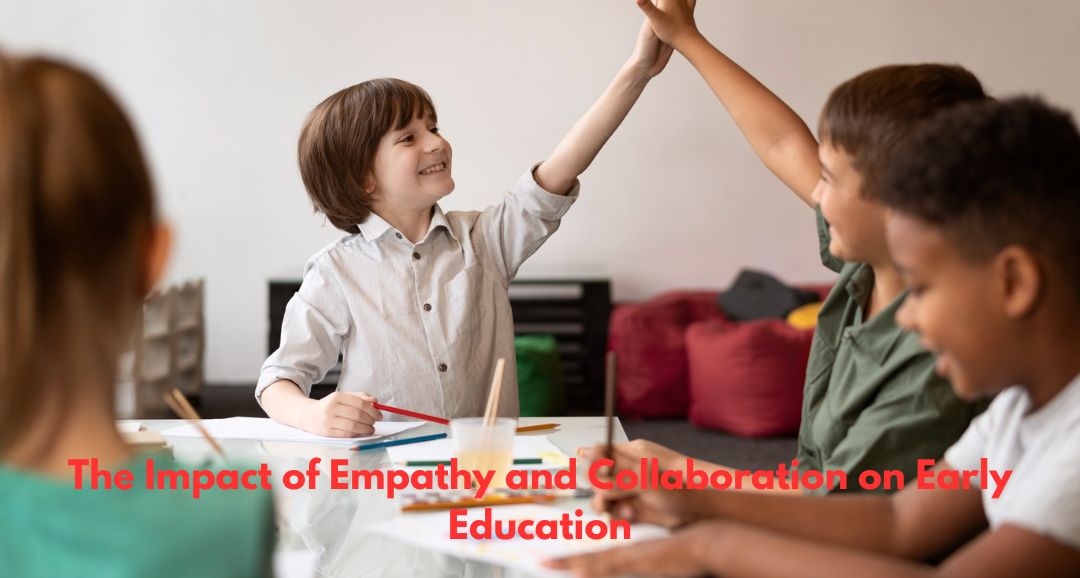
When children collaborate — building a model, painting a mural, or solving a puzzle together — they learn negotiation, patience, and mutual respect. These experiences mirror real-world situations where cooperation is key to success.
Modern educators use collaborative learning as a tool to enhance creativity and build self-confidence. When students see their ideas valued in a group setting, they develop pride in contribution and appreciation for diversity in thought.
3. The Role of Emotional Intelligence in Young Learners
Research consistently shows that children with high emotional intelligence (EQ) perform better academically, handle stress more effectively, and maintain healthier relationships.
Developing EQ in early years involves teaching children to recognize, name, and regulate emotions. Activities like storytelling, art, and reflection circles help them understand empathy through narrative and play.
Schools that emphasize emotional literacy ensure that children are not just learning facts — they’re learning how to relate to people. These qualities prepare them to become caring leaders, responsible citizens, and compassionate friends.
4. Classrooms that Encourage Connection and Cooperation
A classroom designed around empathy and collaboration looks and feels different. It’s inclusive, safe, and full of dialogue. Teachers encourage questions, celebrate differences, and create opportunities for group participation.
Morning circles, shared reading sessions, and buddy programs help children form meaningful connections. Collaborative art or science projects promote teamwork, while peer mentoring allows older students to guide younger ones — reinforcing leadership and compassion simultaneously.
The result is a vibrant learning community where children feel valued, confident, and eager to participate. It’s this spirit of cooperation that truly defines schools — places where academic excellence grows hand in hand with emotional well-being.
5. Teachers as Emotional Role Models
Teachers are the emotional anchors of early learning. Young children observe and internalize their teacher’s reactions, tone, and empathy.
When educators respond to mistakes with understanding rather than criticism, children learn resilience. When they show kindness to every student, they demonstrate inclusion. When they listen attentively, they model respect.
That’s why teacher training in modern institutions includes modules on social-emotional learning (SEL). Educators learn how to identify emotional cues, foster open communication, and create classrooms where empathy is both taught and practiced daily.
6. Resolving Conflicts Through Understanding
Conflicts are natural in any social setting — even among preschoolers. However, schools that emphasize empathy equip children with the tools to resolve differences calmly and respectfully.
Instead of imposing punishment, teachers guide children to express their feelings, listen to others, and find mutual solutions. This process teaches accountability, patience, and compassion.
Over time, students internalize these lessons and begin resolving conflicts independently — a life skill that extends far beyond the classroom walls.
7. Collaborative Learning and Creative Thinking
Collaboration doesn’t just build relationships; it enhances creativity. When children brainstorm ideas together, they discover multiple perspectives and new ways of problem-solving.
In early education programs, group storytelling, cooperative games, and shared experiments help children see that creativity thrives in collaboration. They learn that collective intelligence is more powerful than individual effort.
This cooperative approach also strengthens communication and leadership — key competencies for the 21st-century learner. It’s why forward-thinking educators in the schools place so much emphasis on group learning experiences that spark imagination and innovation.
8. Inclusion Through Empathy
Every classroom includes children with different strengths, needs, and learning styles. Empathy is the bridge that helps create inclusion.
When teachers foster an empathetic environment, children naturally learn to accept and support their peers. A student struggling with a task feels encouraged instead of left behind. A differently-abled child finds friendship instead of isolation.
Through storytelling, group play, and discussions about fairness, educators help children appreciate differences as sources of learning, not division. Inclusion becomes a lived value — shaping more compassionate communities for the future.
9. Family Involvement: Extending Empathy Beyond School
Empathy and collaboration flourish best when home and school work in harmony. Families play a crucial role in reinforcing emotional learning through daily interactions.
Parent-teacher workshops, empathy-based projects, and open communication channels ensure that emotional growth continues beyond the classroom. Schools that encourage parental participation in community events, celebrations, or reading sessions strengthen the bond between home and learning.
When children see empathy modeled consistently at school and at home, they internalize it as a core life principle.
10. Learning Through Play: Empathy in Action
Play is a child’s natural way of exploring the world — and one of the best vehicles for teaching empathy and teamwork.
In structured play activities like role-playing or cooperative building games, children practice understanding others’ viewpoints and expressing feelings safely. They learn to share, negotiate, and compromise.
Pretend play, especially, gives young learners the chance to “step into someone else’s shoes.” When a child plays doctor, firefighter, or teacher, they experience empathy by imagining another person’s challenges and responsibilities.
Such experiences not only nurture creativity but also deepen emotional understanding — making learning both meaningful and joyful.
11. Technology and the Human Connection
In an era of digital classrooms, maintaining human connection is crucial. Thoughtful integration of technology ensures that it enhances, not replaces, interpersonal interaction.
Educators now use digital storytelling tools, empathy-building games, and virtual group projects to strengthen social skills while leveraging innovation. Students engage with peers online, collaborate across cultures, and discuss global issues — expanding empathy beyond physical boundaries.
However, balanced screen time and face-to-face interaction remain essential. The goal is to help children use technology responsibly while staying grounded in real-world relationships.
12. The Science Behind Empathy and Learning
Studies in neuroscience show that empathy activates the same regions in the brain associated with problem-solving and creativity. When children feel emotionally supported, their brains release oxytocin — a hormone linked to trust and openness.
This emotional safety enhances cognitive performance, attention span, and memory retention. It’s scientific proof that kindness literally helps children learn better.
Schools that prioritize empathy therefore see stronger academic outcomes. Emotional well-being is not separate from achievement — it’s a driving force behind it.
13. Creating Safe and Inclusive Spaces
Safety — emotional and physical — is essential for empathy to grow. When children feel secure, they can take risks, express opinions, and engage freely in learning.
Progressive institutions create environments where bullying is replaced with belonging. Quiet zones, mindfulness sessions, and reflection activities help students manage stress and cultivate inner calm.
When compassion is woven into the culture, children thrive academically and emotionally. They learn that respect and care are the foundations of every healthy community.
14. Measuring Growth Beyond Grades
Forward-thinking educators understand that emotional development deserves recognition too. Instead of measuring success solely through marks, schools are beginning to track progress in teamwork, kindness, and participation.
Teachers observe how students collaborate, empathize, and handle conflicts — sharing feedback with parents regularly. This holistic approach helps identify not only what a child knows, but who they are becoming.
By valuing empathy as much as academic achievement, schools redefine what “success” truly means in education.
15. Empathy and Collaboration: Preparing for a Changing World
As the world becomes more interconnected, the ability to understand, adapt, and work with others has never been more vital. Future workplaces will demand not just technical expertise but emotional intelligence and collaborative skills.
Children who grow up practicing empathy become adaptable leaders who can bridge cultural, social, and intellectual divides. They innovate with compassion, lead with inclusion, and contribute positively to society.
That’s why educators and parents alike view empathy and collaboration as the new cornerstones of 21st-century learning.
Conclusion:
The best education systems no longer define success by grades alone. At LPS Global School, the Top Schools in Noida where true excellence lies in producing individuals who combine intellect with empathy, and ambition with compassion.
The schools exemplify this vision — cultivating students who think critically, feel deeply, and work harmoniously with others. By embedding empathy and collaboration into every aspect of learning, they create a generation ready to build a more understanding and unified world.
When children learn to care, connect, and cooperate early on, they carry those lessons for life. Empathy opens hearts; collaboration builds bridges. Together, they shape not just better students, but better human beings.
FAQs:
Q. 1 Why is empathy important in early education?
Ans : It helps children understand emotions, build friendships, and develop compassion from a young age.
Q. 2 How do collaborative activities benefit young learners?
Ans : Group play and projects teach sharing, patience, and cooperation — essential social skills.
Q. 3 How can teachers encourage empathy in the classroom?
Ans : Through storytelling, role-play, and open discussions that highlight kindness and understanding.
Q. 4 What role do parents play in nurturing empathy?
Ans : Parents can model positive behavior and reinforce compassionate values at home.
Q. 5 How does collaboration improve communication skills?
Ans : Children learn to listen, express ideas, and respect others’ opinions while working in teams.
Q. 6 What long-term benefits come from empathetic learning?
Ans : It builds emotional intelligence, resilience, and a sense of community — traits that shape strong future leaders.