
Introduction:
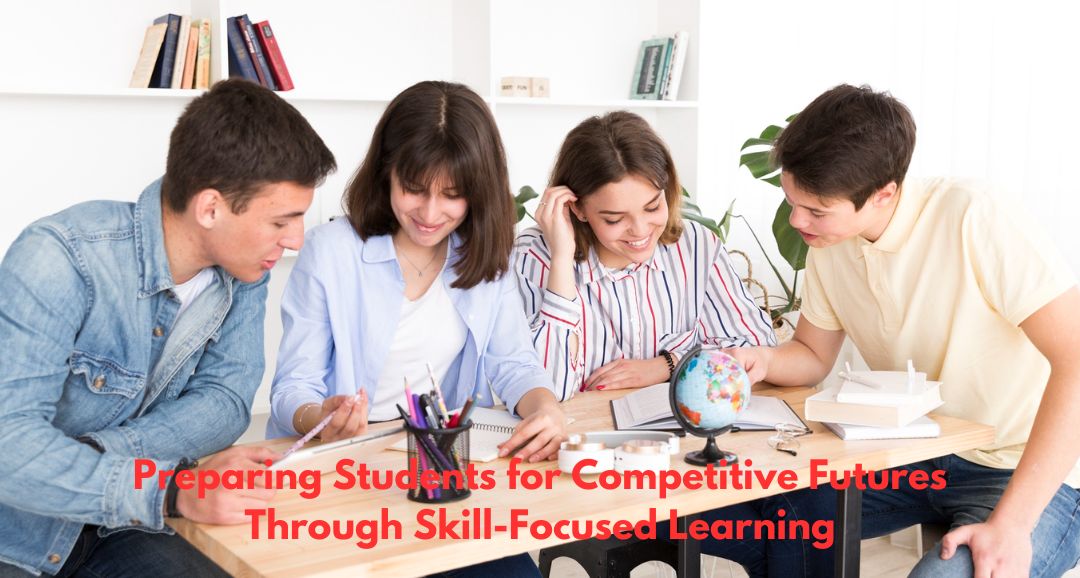
In a world defined by rapid technological change and global competition, academic knowledge alone is no longer enough. At LPS Global School, the Best Academic School in Noida where today’s students must develop a diverse set of skills that empower them to adapt, innovate, and lead. Forward-thinking educational institutions are shifting their focus toward skill-focused learning—an approach that equips learners with the tools they need to succeed in competitive academic and professional environments.
Parents increasingly prioritize institutions that go beyond textbooks to prepare students for real-world challenges.
About Us:
Our approach blends academic excellence with skill-based learning to prepare students for future challenges. Learners participate in coding clubs, robotics sessions, debates, sports, and leadership programs that strengthen critical thinking and communication. Inter-school competitions, workshops, and innovation-driven events help students build practical skills, ensuring they are well-equipped for competitive academic and career pathways.
Why Skill-Focused Learning Matters Today
Traditional education systems often emphasize memorization and exam performance. While academic achievement remains important, modern success depends on a student’s ability to think critically, collaborate effectively, and apply knowledge in practical contexts.
Skill-focused learning bridges this gap by:
- Encouraging analytical and creative thinking
- Building strong communication and problem-solving abilities
- Developing resilience and adaptability
These skills ensure that students are not just exam-ready, but future-ready.
Integrating Academic Excellence with Practical Skills
A strong academic foundation remains central to student success. However, the most effective learning environments integrate subject knowledge with real-life application. Mathematics is connected to logical reasoning, science encourages inquiry and experimentation, and language studies foster articulation and expression.
This balanced approach is a defining characteristic of institutions recognized as the academic school, where learning is meaningful, engaging, and purpose-driven.
Cultivating Critical Thinking and Problem Solving
Competitive futures demand independent thinkers. Skill-focused classrooms encourage students to ask questions, evaluate information, and explore multiple solutions. Project-based learning, case studies, and collaborative assignments help students move beyond passive learning.
By engaging in structured discussions and real-world scenarios, students develop the confidence to approach complex challenges with clarity and creativity.
Communication Skills for Global Success
Effective communication is essential across every field. A skill-focused learning environment places strong emphasis on reading, writing, speaking, and listening skills from an early age.
Through debates, presentations, group discussions, and creative expression, students learn to articulate ideas clearly and respectfully. These experiences prepare them to succeed in competitive academic settings and multicultural professional environments.
Embracing Technology and Digital Literacy
Digital competence is no longer optional—it is a core life skill. Progressive learning environments integrate technology into daily instruction, ensuring students use digital tools responsibly and productively.
From research and presentations to coding fundamentals and online collaboration, students gain exposure to essential digital skills. This readiness is a key reason why parents associate such institutions with the academic school.
Building Leadership and Emotional Intelligence
Success in competitive futures also depends on emotional intelligence and leadership ability. Skill-focused learning nurtures self-awareness, empathy, teamwork, and ethical decision-making.
Students are encouraged to take initiative, participate in group activities, and reflect on their experiences. These opportunities help them develop confidence, accountability, and respect for diverse perspectives.
Assessments That Measure Real Understanding
Modern assessment methods go beyond written exams. Skill-focused institutions adopt continuous and flexible evaluation techniques that assess conceptual understanding, creativity, and application of knowledge.
Regular feedback, self-assessment, and performance-based evaluations allow students to track progress and improve steadily—reducing stress while enhancing motivation.
Preparing for Competitive Exams and Beyond
A strong skill-focused approach naturally supports preparation for competitive exams by strengthening core concepts, time management, and analytical abilities. More importantly, it ensures that students are not limited by exam success alone.
Graduates of such learning environments are prepared for higher education, global opportunities, and lifelong learning—qualities parents seek when identifying the academic school.
Conclusion:
Preparing students for competitive futures requires more than academic rigor—it demands vision, adaptability, and a commitment to holistic growth. Skill-focused learning empowers students to face uncertainty with confidence and competence.
By choosing an institution that blends academic excellence with practical skill development, parents invest not just in education, but in a future where their children can thrive, lead, and succeed in an ever-evolving world.
FAQs:
Q. 1 What is skill-focused learning?
Ans : It combines academic knowledge with practical skills like problem-solving and communication.
Q. 2 How does skill-based education help in competitive exams?
Ans : Strong analytical and time-management skills improve exam performance and confidence.
Q. 3 Which skills are essential for future success?
Ans : Critical thinking, digital literacy, collaboration, and adaptability are key.
Q. 4 How are these skills developed in school?
Ans : Through projects, debates, workshops, clubs, and experiential learning activities.
Q. 5 Does skill-focused learning reduce academic stress?
Ans : Yes, it builds clarity and confidence, reducing dependence on rote memorization.
Q. 6 How does this approach prepare students for real-world challenges?
Ans : It equips learners to apply knowledge effectively in academics and beyond.