
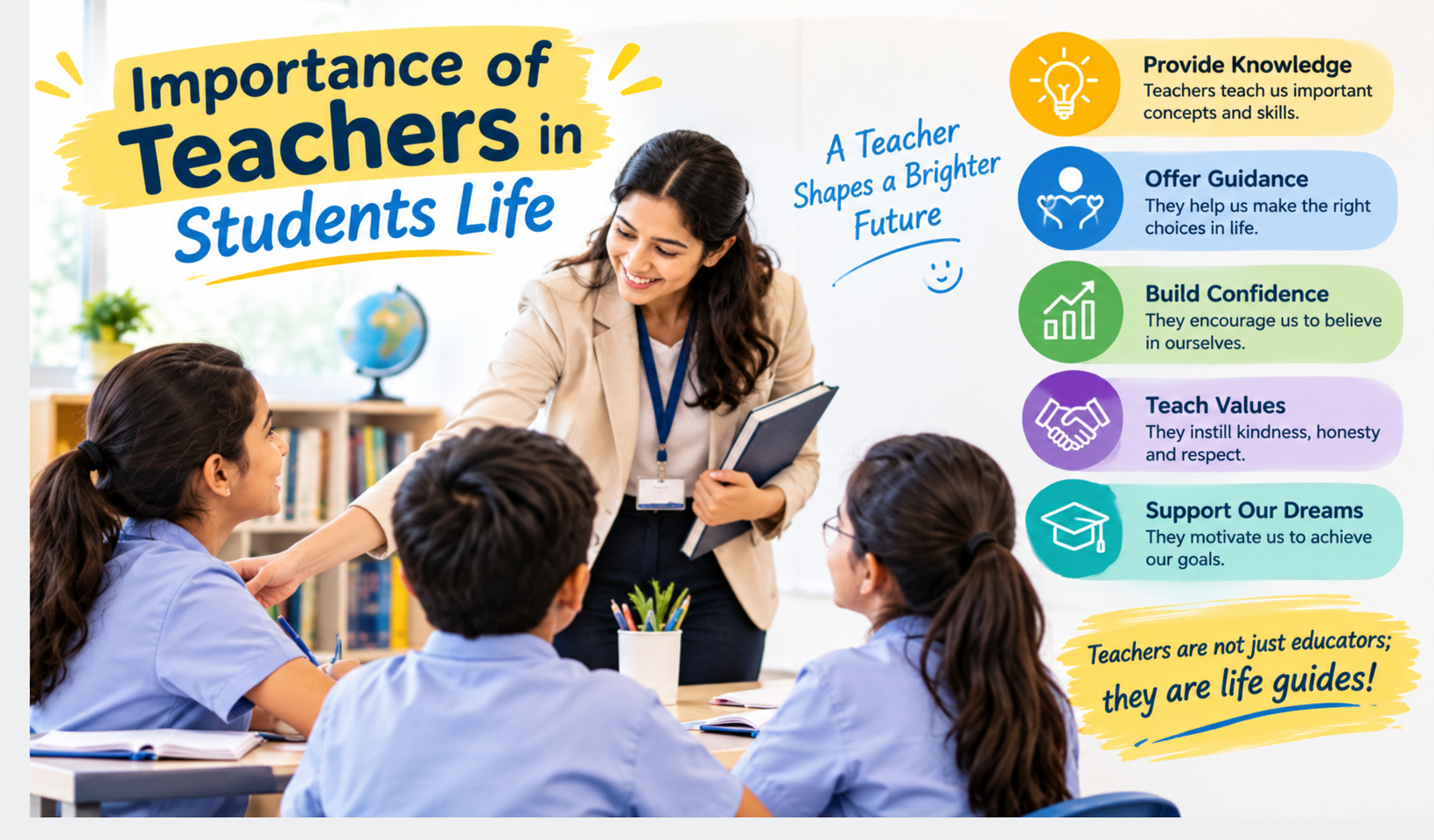
Teachers play an important role in a student’s life. They do more than teach subjects and help students prepare for exams. They guide children, build their confidence, encourage good habits, and help them discover their strengths.
A good teacher makes learning easier and more interesting. Teachers also help students understand the value of honesty, kindness, respect, discipline, and hard work. Their guidance can shape how children think, learn, and face challenges.
At LPS Global School, Noida, learning is connected with the Do-Feel-Learn-Reflect-Be approach. It highlights the importance of experience, understanding, reflection, and personal growth in a child’s learning journey.
In this blog, we will explore the importance of teachers in students’ life, their role in education, and how a positive teacher-student relationship supports a child’s overall development.
Why Are Teachers Important in Students’ Life?
Teachers are important because they guide students in learning, personal growth, and daily life. They help children understand new ideas, develop good habits, and become responsible individuals.
Here are some key reasons teachers play an important role in students’ lives.
1. Teachers Share Knowledge
Teachers help students understand different subjects, such as English, Mathematics, Science, and Social Studies. They explain difficult topics in simple ways and use examples to make lessons easier.
For example, a Science teacher may explain how plants grow by using real plants. This helps students connect classroom learning with the world around them.
2. Teachers Build Confidence
Teachers encourage students to ask questions, share ideas, and take part in classroom activities. Their support helps children believe in their abilities.
When a student makes a mistake, a supportive teacher explains how to improve instead of making the child feel afraid.
3. Teachers Teach Good Values
Education is not only about books and exams. Teachers also help students understand values such as:
- Honesty
- Respect
- Kindness
- Discipline
- Responsibility
- Teamwork
- Patience
These values help children build positive relationships and make thoughtful decisions.
4. Teachers Encourage Curiosity
Good teachers encourage students to ask questions and explore new ideas. They help children understand not only what to learn but also why something happens.
Curiosity makes learning more interesting and helps students develop independent thinking.
5. Teachers Prepare Students for the Future
Teachers help students develop skills that are useful beyond school. These include communication, teamwork, problem-solving, creativity, and decision-making.
Such skills can help children face new situations in higher education, work, and everyday life.
What Is the Role of a Teacher in a Student’s Life?
A teacher has many roles. Teachers act as guides, mentors, motivators, and learning partners who support students at different stages of their education.
1. A Teacher as a Guide
Teachers guide students when they face difficulties in learning. They help them understand their mistakes, improve their work, and make better choices.
2. A Teacher as a Mentor
A mentor understands that every student has different interests and abilities. Teachers can help students identify their strengths and encourage them to work towards their goals.
3. A Teacher as a Motivator
Some students may feel nervous about exams, activities, or difficult subjects. Teachers motivate them to keep trying and understand that improvement takes time.
4. A Teacher as a Role Model
Children often learn by observing adults around them. Teachers can set positive examples through their behaviour, communication, honesty, and respect for others.
5. A Teacher as a Supporter
Students may sometimes struggle with studies, friendships, or confidence. A caring teacher can listen to them, offer guidance, and help them find the right support when needed.
How Do Teachers Influence Students’ Personal Development?
Teachers influence students’ personal development by helping them become confident, responsible, respectful, and independent.
Their influence can be seen in many areas of a child’s life.
1. Emotional Development
Teachers help children understand their feelings and express them in a healthy way. They can encourage patience, kindness, and respect for others.
2. Social Development
Group projects, classroom discussions, and team activities help students learn how to work with others. They understand the importance of listening, sharing, and cooperation.
3. Discipline and Responsibility
Teachers encourage students to follow classroom rules, complete tasks, manage time, and take responsibility for their actions.
4. Independent Thinking
Teachers can encourage students to think about problems and find answers instead of always depending on others. This helps children become more confident in their decisions.
5. Creativity and Problem-Solving
Activities such as art, experiments, discussions, and projects give students opportunities to explore ideas and find different ways to solve problems.
How Does a Good Teacher-Student Relationship Improve Learning?
A positive teacher-student relationship helps students feel comfortable, respected, and supported in the classroom.
When children trust their teachers, they may feel more confident about asking questions, sharing ideas, and discussing learning difficulties.
Here are some ways a good relationship supports learning:
- Better communication: Students feel comfortable expressing their thoughts.
- More classroom participation: Children become more willing to answer questions and join activities.
- Improved confidence: Supportive feedback helps students believe in their abilities.
- Positive behaviour: Mutual respect encourages a friendly classroom environment.
- Better understanding: Teachers can identify areas where students may need extra help.
A good relationship does not mean that teachers should avoid rules. It means maintaining a balance between care, guidance, discipline, and respect.
What Are the Qualities of a Good Teacher?
A good teacher needs more than subject knowledge. They should also understand students’ learning needs and create a positive classroom environment.
Some important qualities include:
| Quality | Why It Matters |
|---|---|
| Patience | Helps teachers support students who learn at different speeds. |
| Communication | Makes lessons and instructions easier to understand. |
| Knowledge | Helps teachers explain subjects correctly. |
| Creativity | Makes classroom learning more interesting. |
| Empathy | Helps teachers understand students’ feelings and needs. |
| Fairness | Encourages respect and trust among students. |
| Encouragement | Motivates students to keep learning and improving. |
| Adaptability | Helps teachers use different methods for different learning needs. |
A teacher who combines these qualities can create a classroom where students feel encouraged to learn and grow.
How Can Teachers Make Learning More Interesting?
Teachers can make learning more interesting by using different activities and teaching methods. Students often understand concepts better when they can connect lessons with real-life experiences.
Here are some useful ways teachers can make classroom learning engaging.
1. Use Real-Life Examples
Teachers can explain topics using examples from daily life. For example, Mathematics can be taught through shopping, counting objects, or measuring things.
2. Encourage Classroom Discussions
Discussions allow students to share opinions, ask questions, and learn from one another.
3. Use Visual Learning Materials
Charts, pictures, models, maps, and videos can help students understand difficult ideas.
4. Organise Group Activities
Group projects and team tasks teach students cooperation, communication, and responsibility.
5. Encourage Learning Through Activities
Experiments, role-play, storytelling, and practical tasks help students understand concepts through experience.
6. Give Helpful Feedback
Teachers should explain what students have done well and where they can improve. Clear feedback helps students understand their progress.
What Is the Role of Teachers in Developing 21st-Century Skills?
Teachers help students develop skills that are useful in a changing world. These skills go beyond textbook knowledge and prepare children to handle new challenges.
Some important skills include:
- Critical thinking: Understanding information and making thoughtful decisions.
- Creativity: Developing new ideas and trying different approaches.
- Communication: Sharing thoughts clearly and listening to others.
- Collaboration: Working with people and respecting different opinions.
- Digital awareness: Learning to use technology carefully and responsibly.
- Problem-solving: Finding practical answers to everyday challenges.
Teachers can develop these skills through discussions, classroom projects, activities, presentations, and practical learning experiences.
How Do Teachers at LPS Global School Support Students’ Growth?
At LPS Global School, Noida, teachers play an important role in creating a learning environment that supports academic progress and personal development.
The school’s educational approach focuses on curiosity, exploration, experimentation, and reflection. Its mission highlights the importance of helping students think critically, act ethically, and develop their individual talents.
The Do-Feel-Learn-Reflect-Be Learning Model
LPS Global School follows the Do-Feel-Learn-Reflect-Be model. This approach connects learning with experience and reflection.
The model has five stages:
- Do: Students take part in an activity or experience.
- Feel: They experience and respond to what happens during the activity.
- Learn: They understand the concept or lesson.
- Reflect: They think about what they learned and why it matters.
- Be: They apply their learning in everyday life.
Teachers help guide students through these stages by creating opportunities to participate, explore, understand, and reflect.
Encouraging Curiosity and Independent Thinking
Teachers can help students become active learners by encouraging questions and discussions. LPS Global School’s learning philosophy places importance on exploration and experimentation.
This approach supports students in developing their own ideas and understanding concepts instead of only memorising information.
Supporting Holistic Development
A child’s development includes more than academic performance. Communication, creativity, emotional growth, teamwork, and responsibility are also important.
LPS Global School’s mission and vision focus on academic learning along with physical, emotional, and social development. Teachers contribute to this wider learning journey through classroom experiences and student activities.
Parents can explore the LPS Global School learning model and mission and vision to understand the school’s educational approach.
How Can Parents Support Teachers in a Child’s Education?
Parents and teachers both play important roles in a child’s development. When they communicate and work together, students receive better support at school and at home.
Parents can support teachers through simple steps:
- Attend parent-teacher meetings.
- Discuss the child’s learning progress.
- Encourage regular study habits at home.
- Respect teachers and school rules.
- Share any learning concerns with the school.
- Encourage children to complete tasks independently.
- Appreciate the child’s efforts and improvements.
A healthy partnership between parents and teachers creates a supportive learning environment for children.
Conclusion: Importance of Teachers in Students’ Life
The importance of teachers in students’ life goes far beyond classroom teaching. Teachers share knowledge, build confidence, teach values, encourage curiosity, and guide children towards a better future.
A good teacher helps students understand their strengths, learn from mistakes, and develop skills that are useful throughout life. The support and guidance students receive during their school years can influence their academic and personal growth.
At LPS Global School, Noida, the Do-Feel-Learn-Reflect-Be learning model reflects the importance of experience, understanding, and reflection in education. With teachers guiding this process, students get opportunities to learn, explore, and develop as confident and responsible individuals.
Frequently Asked Questions
1. Why are teachers important in students’ life?
Teachers are important because they help students gain knowledge, develop confidence, learn good values, and improve important life skills. They also guide children through learning challenges and encourage them to work towards their goals.
2. What is the most important role of a teacher?
One of the most important roles of a teacher is to guide students in their learning and development. Teachers explain concepts, encourage questions, provide feedback, and help students become independent and responsible learners.
3. How do teachers influence students’ future?
Teachers influence students’ future by helping them develop knowledge, communication, problem-solving, and decision-making skills. They can also encourage students to explore their interests and make thoughtful choices about their education and goals.
4. What are the five qualities of a good teacher?
Five important qualities of a good teacher are patience, subject knowledge, clear communication, empathy, and fairness. These qualities help teachers understand students and create a positive classroom environment.
5. How does a teacher help students build confidence?
Teachers build confidence by encouraging participation, appreciating effort, giving helpful feedback, and helping students learn from mistakes. A supportive teacher makes students feel comfortable trying new things.
6. How do teachers support holistic development?
Teachers support holistic development by encouraging academic learning, creativity, communication, teamwork, emotional awareness, and responsible behaviour. Classroom activities and group projects can help students develop these skills.
7. What is the role of teachers at LPS Global School?
At LPS Global School, teachers support learning through an educational approach that values experience, exploration, and reflection. The school’s Do-Feel-Learn-Reflect-Be model connects classroom experiences with understanding and personal growth.