
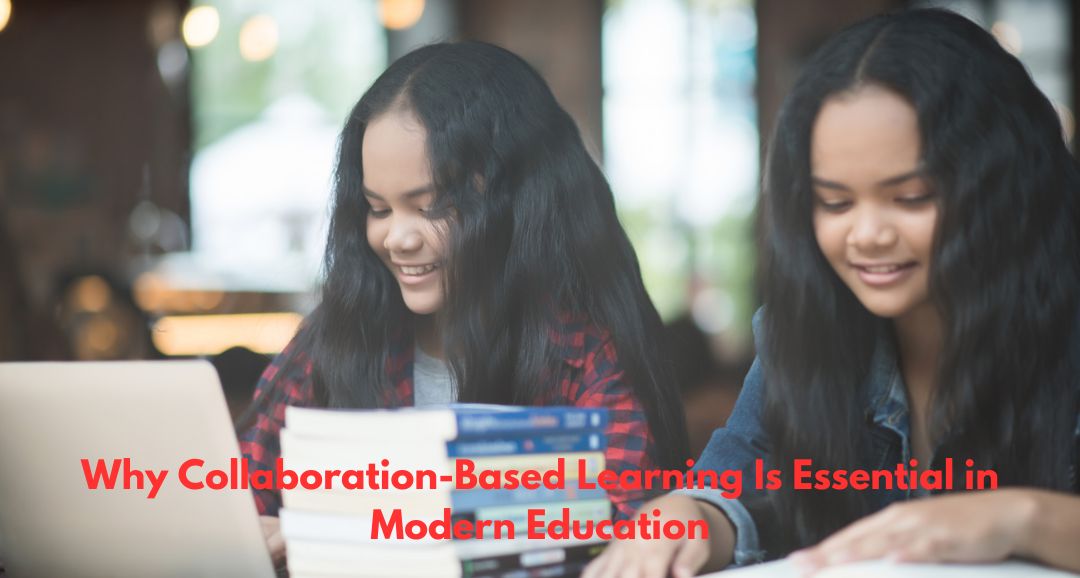
Key Highlights
- Collaboration-based learning builds communication, teamwork and problem-solving skills.
- It helps students move beyond memorisation and understand concepts deeply.
- Group learning improves confidence, leadership and classroom participation.
- Modern classrooms need shared learning experiences to prepare students for real-world challenges.
- Choosing a Top Rated academic school helps parents find a balanced learning environment.
Table of Contents
- Introduction
- About Us
- Why Does Collaboration-Based Learning Matter Today?
- How Does Collaborative Learning Improve Academic Growth?
- Why Is Teamwork Important for Future-Ready Students?
- How Can Schools Create Better Collaborative Classrooms?
- Collaboration-Based Learning: Quick Comparison Table
- Conclusion
- FAQs
Introduction:
Modern education is no longer limited to textbooks, lectures and written examinations. At LPS Global School, the Best Academic School in Noida where today, children need learning experiences that help them think, discuss, question, create and solve problems with others. Collaboration-based learning supports this shift by encouraging students to work in pairs or groups, exchange ideas, listen actively and build knowledge together. It makes classrooms more interactive and helps children understand that learning is not only about individual performance but also about shared growth.
About Us:
LPS Global School focuses on creating a child-centric academic environment where students are encouraged to learn with confidence, curiosity and purpose. With thoughtfully planned infrastructure, supportive learning spaces and a balanced approach to academics and activities, the school works toward helping children grow as independent thinkers, responsible learners and confident communicators.
Why Does Collaboration-Based Learning Matter Today?
Collaboration-based learning matters because the world outside school depends heavily on teamwork. Whether a child chooses science, business, technology, design, public service or entrepreneurship in the future, the ability to work with others will remain essential.
In a collaborative classroom, students are encouraged to:
- Share ideas without hesitation.
- Listen to classmates with patience.
- Take responsibility for assigned roles.
- Solve challenges through discussion.
- Learn from mistakes and peer feedback.
- Build confidence through group participation.
This method also helps teachers understand how students think, communicate and apply concepts in real situations.
How Does Collaborative Learning Improve Academic Growth?
Collaborative learning improves academic growth by making lessons more active and meaningful. Instead of only receiving information, students participate in the learning process. They discuss topics, ask questions, explain answers and connect classroom concepts with practical situations.
For example, a science lesson can become more engaging when students work together on an experiment. A language class can become more expressive when students create stories in groups. A social science topic can become clearer when learners debate, research and present different viewpoints.
This approach supports:
- Better concept clarity.
- Improved memory retention.
- Stronger reasoning ability.
- Peer-to-peer learning.
- Active classroom engagement.
- Higher participation among shy students.
Why Is Teamwork Important for Future-Ready Students?
Teamwork teaches children lessons that books alone cannot teach. When students work in groups, they learn patience, responsibility, leadership and cooperation. They also learn how to manage disagreements respectfully.
Future-ready students need more than subject knowledge. They need the ability to communicate clearly, think critically and adjust to different situations. Collaborative tasks help students practice these skills naturally during classroom activities, projects, presentations and discussions.
Teamwork also builds emotional maturity. Students understand that every group member may have a different strength. One child may be good at research, another at presentation, another at design and another at organising ideas. When these strengths come together, the learning outcome becomes richer.
How Can Schools Create Better Collaborative Classrooms?
Schools can create better collaborative classrooms by designing activities that encourage participation, curiosity and shared responsibility. Teachers play a key role in making group learning purposeful rather than random.
Effective collaborative classrooms include:
- Group projects with clear roles.
- Peer discussions after lessons.
- Activity-based learning.
- Case studies and real-life examples.
- Classroom debates and presentations.
- Creative problem-solving tasks.
- Reflection sessions after group work.
Teachers should also guide students on how to listen, contribute and respect different opinions. This makes collaboration structured, inclusive and productive.
Collaboration-Based Learning: Quick Comparison Table
| Learning Area | Traditional Learning | Collaboration-Based Learning |
| Student Role | Mostly listener | Active participant |
| Classroom Style | Lecture-focused | Discussion-focused |
| Skill Development | Academic recall | Communication, teamwork and reasoning |
| Confidence Building | Limited speaking opportunities | Regular participation |
| Problem Solving | Individual effort | Shared thinking and solutions |
| Learning Outcome | Marks-oriented | Conceptual and skill-based growth |
Learning Impact Chart
| Skill Area | Impact of Collaborative Learning |
| Communication | High |
| Confidence | High |
| Critical Thinking | High |
| Leadership | Medium to High |
| Creativity | High |
| Social Awareness | Medium to High |
Conclusion:
Collaboration-based learning is essential in modern education because it prepares students for both academic success and real-world situations. It helps children become better thinkers, speakers, listeners and problem-solvers. When students learn together, they do not just complete a task; they understand ideas from different perspectives and develop respect for teamwork.
FAQs:
Q. 1 How does LPS Global School make collaboration-based learning better than only textbook learning?
Ans : It encourages students to discuss, participate and apply concepts instead of only memorising lessons.
Q. 2 Why should parents compare LPS Global School with schools that follow traditional classroom methods?
Ans : Parents can compare how actively children participate, communicate and develop teamwork skills.
Q. 3 How is LPS Global School different from schools that focus only on marks?
Ans : It supports academic learning along with confidence, communication and practical understanding.
Q. 4 Does LPS Global School help students learn teamwork better than lecture-only schools?
Ans : Yes, group activities and classroom participation help students learn cooperation and responsibility.
Q. 5 Why is LPS Global School suitable for parents comparing modern education options?
Ans : It offers a balanced environment where academics and skill-based learning work together.
Q. 6 How can LPS Global School prepare students better than schools with limited activity-based learning?
Ans : It helps students build problem-solving, leadership and communication skills through active learning.