
Key Highlights
- Student voice gives learners opportunities to express ideas, questions and perspectives.
- Active participation can make classroom learning more engaging and memorable.
- Discussion, collaboration and hands-on activities encourage deeper understanding.
- Giving students responsibility can strengthen confidence and decision-making.
Introduction
A classroom becomes more meaningful when students are not simply expected to receive information but are encouraged to become part of the learning process. Asking questions, sharing opinions, solving problems, working with peers and reflecting on experiences can change the way children understand both subjects and themselves.
At LPS Global School, this is one reason families evaluating Good Schools in Noida may look beyond academic performance and consider whether a school creates opportunities for curiosity, participation, collaboration and independent thinking.
What Does Student Voice Really Mean?
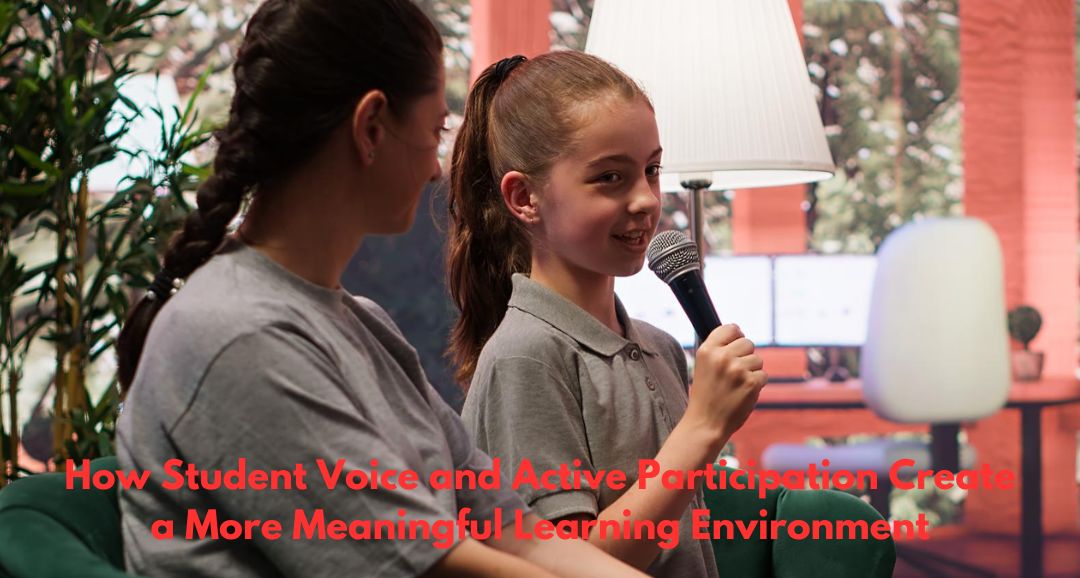
Student voice is not simply about allowing children to speak more in class. It is about creating an environment where their ideas, questions, observations and perspectives are treated as meaningful parts of the learning experience.
A teacher might ask students how they would approach a problem, invite different interpretations of a story, encourage them to suggest solutions or allow them to reflect on an activity. These small opportunities can help students understand that their thinking has value.
Why Participation Changes the Learning Experience
There is a significant difference between knowing something and being able to use it.
Active participation gives students opportunities to move from understanding information to applying it. A science concept can become an experiment. A mathematics lesson can become a real-life problem. A language topic can turn into a presentation or creative activity.
The experience becomes more memorable because students are involved in creating the learning process.
A participative classroom can also encourage students to take greater ownership of their work. Instead of immediately waiting for the teacher to provide an answer, they may begin asking:
“What can I try?”
“Why does this happen?”
“Is there another way to solve it?”
These questions represent an important movement from passive learning towards independent thinking.
From Listening to Doing: Making Students Active Learners
Learning becomes particularly powerful when students can connect ideas with experiences.
This principle is reflected in the Do–Feel–Learn–Reflect–Be model described in the school’s learning philosophy. The approach places experience and reflection at the centre of learning, encouraging children to participate, understand the outcome, reflect on it and eventually apply that learning to life.
In practical terms, active learning can involve:
- Experiments and demonstrations
- Project-based activities
- Group discussions
- Presentations and debates
- Problem-solving exercises
- Creative assignments
- Peer learning
- Research-based tasks
- Role-playing and simulations
- Reflection activities
How Choice Builds Confidence and Responsibility
Children develop confidence when they experience situations where their decisions matter.
Giving students limited but meaningful choices can support this development. They might select a project topic, choose how to present their work, divide responsibilities within a team or suggest questions for further exploration.
Such experiences teach an important lesson: freedom and responsibility go together.
The Classroom as a Space for Ideas
A meaningful classroom does not need every student to agree with one another.
In fact, differences of opinion can make learning richer.
Teachers can encourage students to explain why they think something, support their arguments with evidence and listen respectfully to alternative viewpoints. Over time, such practices can strengthen communication, reasoning and social awareness.
This creates a learning culture where questions are welcomed, mistakes are discussed and ideas are examined rather than immediately judged.
Learning Through Exploration and Reflection
Exploration gives children the opportunity to discover. Reflection helps them understand what they discovered.
Both are important.
The educational philosophy provided by the school emphasises exploring, experimenting, inferring, learning and refining oneself. It also highlights positive thinking, creativity and the effort to bring out the best in each learner.
Reflection can be introduced through simple questions:
- What did I learn?
- What surprised me?
- What was difficult?
- What would I do differently?
- Where can I use this knowledge?
Building a Culture of Participation
Student participation works best when it becomes part of the culture rather than an occasional classroom activity.
Schools can encourage participation by creating opportunities across different areas of school life. Classroom discussions, clubs, sports, arts, student projects, leadership activities and community initiatives can all give learners different ways to contribute.
Not every child will participate in the same manner.
One student may enjoy speaking in front of a group. Another may prefer designing, writing, organising or researching. A truly inclusive environment recognises these differences and provides multiple avenues for students to demonstrate their abilities.
The Role of Teachers in Student-Centred Learning
Teachers remain central to an active learning environment.
The student voice does not reduce the importance of teachers. Instead, it changes some aspects of their role. Along with explaining concepts, teachers can become facilitators who ask thoughtful questions, guide discussions, provide feedback and help students make connections.
Effective teachers know when to provide direction and when to step back.
Sometimes the most valuable teaching moment comes from allowing students enough space to discover an answer themselves.
Conclusion
Student voice can change the relationship children have with learning.
At LPS Global School, when students are encouraged to ask questions, share ideas, make choices, collaborate with others and reflect on their experiences, education can become more personal and purposeful. This is one of the qualities parents often look for when evaluating Good Schools in Noida, where meaningful learning goes beyond textbooks. Students begin to understand that learning is not simply about finding the correct answer—it is also about discovering how to think, communicate, adapt and grow.
A meaningful learning environment therefore gives students both a voice and a role.
The most effective classrooms may not always be the quietest ones. They are often the spaces where curiosity is visible, questions are welcomed, mistakes become learning opportunities and students feel confident enough to say, “I have an idea.”
FAQs
Q. 1 What is the student voice in education?
Ans : Student voice means giving learners meaningful opportunities to express their ideas, opinions, questions and perspectives during their learning journey.
Q. 2 How does active participation improve learning?
Ans : Participation encourages students to apply knowledge, solve problems, collaborate and connect classroom concepts with real experiences.
Q. 3 Does student voice mean students make all classroom decisions?
Ans : No. It means their perspectives are heard and considered while teachers continue to provide structure, guidance and appropriate boundaries.
Q. 4 How can teachers encourage quieter students to participate
Ans : Teachers can use small-group activities, written reflections, creative tasks and one-to-one interactions so students have different ways to express themselves.
Q. 5 Why is reflection important for students?
Ans : Reflection helps learners understand what they experienced, what they learned and how they can improve or apply that knowledge in the future.
Q. 6 What makes a learning environment meaningful?
Ans : A meaningful environment combines academic learning with curiosity, participation, collaboration, creativity, reflection and opportunities for personal growth.