
Key Highlights
- Personalized learning focuses on individual student needs, abilities and learning pace.
- It improves academic understanding through customized teaching approaches.
- Students become more confident, motivated and actively involved in learning.
- Technology and innovative teaching methods support personalized education.
- Choosing a Best International School helps parents provide children with a future-focused learning environment.
Table of Contents
- Introduction
- About Us
- Why Is Personalized Learning Important in Modern Education?
- How Does Personalized Learning Improve Academic Performance?
- Why Does Personalized Learning Increase Student Engagement?
- How Can Schools Implement Effective Personalized Learning?
- Personalized Learning vs Traditional Learning: A Comparison
- Conclusion
- FAQs
Introduction:
Every child learns differently. Some students understand concepts quickly, while others need additional guidance, practical examples or more time to explore ideas. At LPS Global School, the Best CBSE School in Noida where personalized learning recognises these individual differences and creates an educational approach that supports every learner according to their strengths, interests and learning requirements. Instead of following a single teaching method for all students, it focuses on creating meaningful learning experiences that help children achieve their full potential.
About Us:
LPS Global School focuses on providing a supportive and progressive learning environment where students are encouraged to explore their abilities and develop confidence. With a balanced approach towards academics, creativity and skill development, the institution aims to nurture learners who are prepared for future opportunities.
Why Is Personalized Learning Important in Modern Education?
Personalized learning is important because students have different learning styles, abilities and interests. A uniform approach may not address the unique requirements of every child. By adapting teaching methods, educators can ensure that students receive the right guidance at the right time.
Modern education focuses on developing learners who can think independently and apply knowledge practically. Personalized learning supports this goal by encouraging students to actively participate in their educational journey.
Key advantages include:
- Recognising individual learning needs.
- Providing targeted academic support.
- Encouraging self-paced learning.
- Improving confidence and motivation.
- Helping students develop independent learning habits.
- Creating stronger teacher-student connections.
This approach allows children to learn in a way that matches their capabilities while continuously improving their skills.
How Does Personalized Learning Improve Academic Performance?
Personalized learning improves academic performance by addressing learning gaps and providing focused support. When teachers understand a student’s strengths and challenges, they can design strategies that make difficult concepts easier to understand.
For example, a student struggling with mathematics may benefit from additional practice, visual explanations or activity-based learning. Another student who excels in a subject may receive advanced challenges to continue improving.
Personalized learning supports academic growth through:
- Customized learning plans.
- Regular progress assessment.
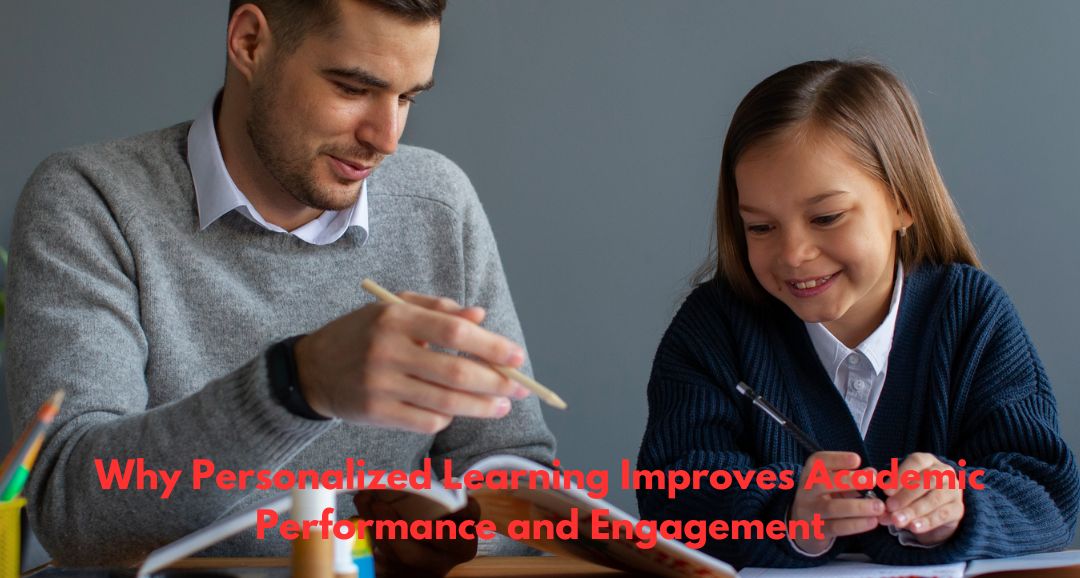
- Individual feedback from teachers.
- Additional support where required.
- Advanced learning opportunities for students ready for challenges.
This approach helps students build stronger foundations and develop confidence in their abilities.
Why Does Personalized Learning Increase Student Engagement?
Student engagement increases when children feel connected to the learning process. Personalized learning allows students to explore topics according to their interests, making lessons more meaningful and enjoyable.
When students receive learning experiences designed around their needs, they become more willing to participate, ask questions and express their ideas. This creates a positive classroom atmosphere where learning becomes an active experience rather than a passive activity.
Personalized learning improves engagement by:
- Making lessons more relevant.
- Encouraging student participation.
- Supporting creativity and exploration.
- Building confidence through achievement.
- Reducing learning-related stress.
How Can Schools Implement Effective Personalized Learning?
Schools can implement personalized learning by combining innovative teaching methods, technology and continuous assessment. Teachers play a vital role in understanding student progress and modifying learning strategies accordingly.
Effective personalized learning practices include:
- One-on-one guidance and mentoring.
- Technology-supported learning tools.
- Flexible learning activities.
- Project-based assignments.
- Regular performance reviews.
- Interest-based learning opportunities.
Teachers can use classroom observations, assessments and feedback to identify how each student learns best. This helps create a supportive environment where every child receives opportunities to succeed.
Personalized Learning vs Traditional Learning: A Comparison
| Learning Aspect | Traditional Learning | Personalized Learning |
| Teaching Approach | Same method for all students | Adapted according to individual needs |
| Learning Pace | Fixed pace | Flexible pace |
| Student Role | Follows instructions | Actively participates |
| Assessment | Mainly exam-based | Continuous progress tracking |
| Support System | General guidance | Targeted academic support |
| Engagement Level | Depends on student interest | Higher involvement and motivation |
Impact of Personalized Learning on Students
| Development Area | Impact |
| Academic Performance | Better understanding and improved outcomes |
| Confidence | Increased through personalised support |
| Creativity | Encourages exploration and new ideas |
| Independence | Develops self-learning abilities |
| Motivation | Creates interest in learning |
Conclusion:
Personalized learning is transforming modern education by placing students at the centre of the learning process. It helps children understand concepts better, improve academic performance and develop confidence through customised support. By recognising individual strengths and challenges, schools can create learning experiences that inspire curiosity and continuous growth.
FAQs:
Q. 1 How does LPS Global School use personalized learning compared to traditional teaching methods?
Ans : LPS Global School focuses on individual learning needs, while traditional methods generally follow the same approach for all students.
Q. 2 Why should parents compare LPS Global School with schools that do not offer customized learning support?
Ans : The comparison helps parents understand how personalized guidance can improve student confidence and academic growth.
Q. 3 Is LPS Global School better for student engagement than schools following only standard classroom methods?
Ans : Its student-focused approach encourages active participation and meaningful learning experiences.
Q. 4 How is LPS Global School different from schools that provide limited individual attention?
Ans : It emphasizes understanding student progress and providing suitable academic support.
Q. 5 Why do parents consider LPS Global School while choosing a modern education environment?
Ans : The approach balances academic excellence with personalized learning experiences.
Q. 6 Can LPS Global School help students perform better than traditional learning models?
Ans : Personalized learning supports stronger understanding, motivation and skill development among students.